

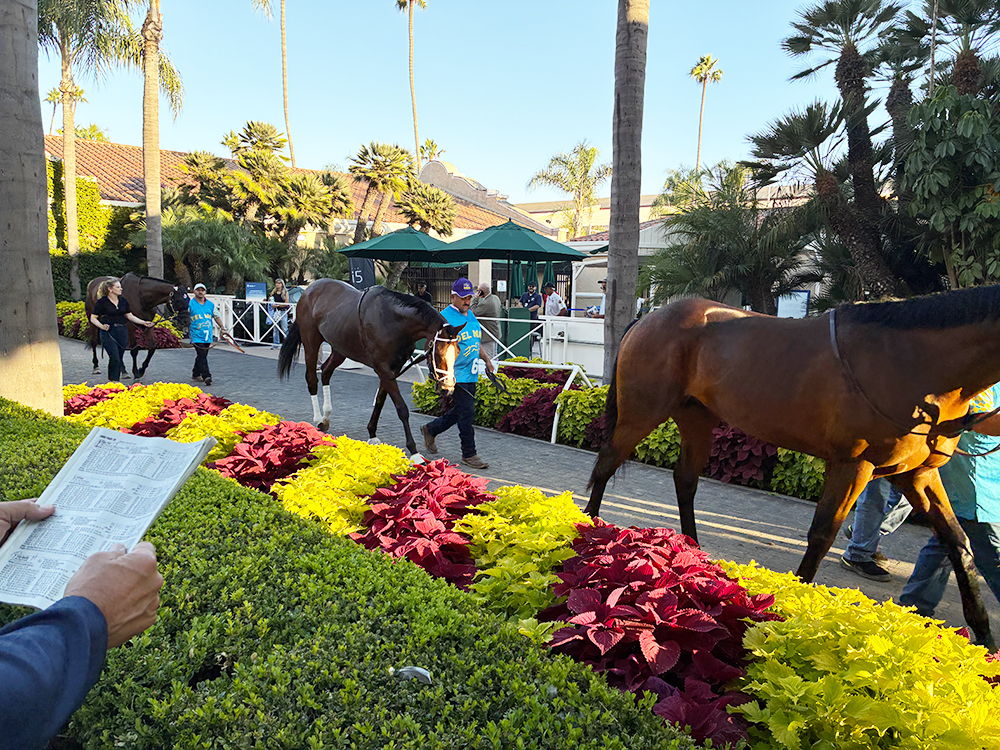
The declining popularity and financial challenges the U.S. horse racing industry faces today are the direct result of its failure to take responsibility for the lifetime care and welfare of every thoroughbred horse bred for racing. That situation must change if the industry is to survive.
The mission of Horsewatch Foundation is to educate the general public and lobby State and Federal legislatures regarding the urgent need for fundamental changes in the way the U.S. thoroughbred racing industry is funded, organized and operated. Horsewatch intends to help implement those changes by promoting voluntary cooperation and action where possible, the adoption of relevant State and Federal legislation as needed, and when necessary, the use of appropiate civil litigation in the State and Federal courts.
We invite like-minded individuals and organizations to join us in this effort and support Horsewatch's work, whether by volunteering to lend their expertise to our initiatives, working to organize meet-ups and town hall meetings across the country, lobbying State and Federal legislators and regulators - as well as providing financial support for the legal, administrative and public relations resources required to achieve its goals.

Recent conversations on social media about the future of horse racing and finding solutions for funding thoroughbred aftercare -- including discussion of the supposed role or responsibility of the United States Jockey Club with regard to these matters -- seem to have largely missed the mark. Hyperbolic, sometimes poorly informed chatter is not conducive to effecting positive structural changes in the horse racing industry, much less achieving any improvements in the welfare of the thoroughbred horses who make the industry possible in the first place. While some may find it more entertaining to promote division, acrimony and ad hominem attacks on prominent personalities and institutions in the horse racing industry, that is no way to build consensus, and certainly no way to actually accomplish what most informed stakeholders agree are much needed changes in all aspects of horse racing.
1. Providing Quality Lifetime Care For Thoroughbred Horses is Expensive, as is the Sport Itself. If You Can't Afford it, Get Out of the Game. Stop Making Innocent Horses Pay for Your Misguided Social Aspirations or Delusions of Grandeur.
A recent analysis by Mareworthy Charities, a 501(c)3 charity thoroughbred rescue located in Georgetown Kentucky, indicates that some 470,000 to 540,000 thoroughbreds from the Nation's 2000-2025 foal crops may still be alive today, of which nearly 260,000 may represent mares, with the balance of some 210,000-280,000 horses representing male horses (either geldings or stallions). Assuming an average unisex life expectancy of 25 years from birth, there is an indication that roughly 37.5% of those horses are between the ages of 5-15, with an average per horse life expectancy of 15 years, and 51% of those horses are aged 16 yrs and older, with an average per horse life expectancy of 9 years. Another major assumption is that only about 30% of horses still alive actually need aftercare assistance, the balance are already thankfully in good hands.
The bottom line - using standard actuarial mortality factors, the cost of money, inflation, etc. -- the total present value of cost of providing quality care for these horses for their lifetime is estimated to be well in excess of US$6 Billion Dollars. No discussion about thoroughbred aftercare to date has effectively dealt with or proposed any solution to dealing with this level of unfunded liability -- which makes talk about thoroughbred aftercare funding levels of $25-35 million a year, based on increased thoroughbred registration fees or 'taxes' on breeding or auction sales, nothing more than a drop in the bucket, when compared to actual needs.
2. Decisions About Thoroughbred Aftercare and the Welfare of Horses Should Be Made By Hands-On Horse People, Not Management Consultants, Thought Leaders, Disengaged Owners, or Well-Intentioned But Unqualified Social Activists.
Just as some level of actual competence and experience is required to run a successful business, write articles, be a podcaster or act as an influencer, so too is actual competence and experience in the hands-on care and handling of thoroughbred horses required in order to make decisions about how to provide high quality care for off-the-track thoroughbreds. It is notable that far too few hard-working people from this group appear to have been involved in these on-line discussions -- possibly because they're actually too busy caring for horses on a daily basis, and aren't interested, or too tired at the end of an exhausting day to participate in political chatter that isn't calculated to achieve anything practical anytime soon in the real world.
3. Horse Racing Venues Built Long Ago to Support a Lifestyle That No longer Exists Are Now Located in the Wrong Places and Do Not Provide an Optimal Environment for Today's Thoroughbred Race Horses.
Contributing to the thoroughbred aftercare funding problem is an often overlooked fact that affects both thoroughbred aftercare and the decline in public interest in horse racing as a whole -- namely that the oldest, most well-known U.S. racetracks are located very close to large urban centers, in order to allow average Americans who depended on public transport back in the 1930's to conveniently access a track and wager on races. In those times, of course, all legal wagering on horse races occurred at the track, not via the OTBs and cell phone-based ADWs which facilitate the bulk of wagering activity today.
There is no practical reason to locate race tracks on high cost, urban-adjacent real estate today, where space considerations dictate marginal accommodations for high energy thoroughbred race horses, lacking any form of turnout and the opportunity for low intensity exercise and freedom of movement that are essential to a horse's sense of well-being. Moreover, long term private ownership of such facilities is constantly subject to the draw of much more lucrative private mixed use development alternatives - as was already the case with Hollywood Park and Golden Gate Fields in California, and may in the future be the case with Gulfstream and Santa Anita. Because of this, a significant and increasing number of thoroughbred race horses don't have any permanent, farm-based home during their racing career, but are essentially destined to live out their lives while on track in small stalls, denied the benefits of grass pasture and freedom of movement that is such a defining aspect of a thoroughbred horse's genetic destiny.
This is just another instance of the horse racing industry failing to adapt to significant and obviously impactful cultural changes, mistakenly focusing instead, whether intentionally or by default, on preserving the antiquated artifacts of its historical legacy despite the obvious destructive effects of those obsolete practices on enhancing the sport's popular appeal . Whether it's antiquated tote systems, unable to process CAW betting activity fast enough from displaying radical odds shifts well after a race's start, run-down physical facilities, or the lack of innovations in wagering options or availability of handicapping data that might attract a younger, video game-oriented group of bettors to the game. In today's world, the need to embrace change is no longer optional, it is a critical requirement for survival. The blame for this rests with the horse racing industry as a whole, not any particular institution or individual. To suggest otherwise is simply not appropriate.
4. Requiring Breeders of Thoroughbred Horses to Take Management Responsibility for their Lifetime Care is the Only Credible and Ethical Way to Enforce Welfare Standards Over The Long Term.
Many people seemingly lose sight of the fact that thoroughbred horses are intentionally bred for racing, they do not exist in the wild. The responsibility for their lives, just as in the case of a human parent's child, is in the first instance, the responsibility of the breeder. The difference between a human child and a horse is, of course, that a human child is expected under normal circumstances to eventually become self-supporting and no longer dependent on its parents, while a horse, remains dependent on his or her human owner, the identity of which can of course, change over time, as a horse, unlike a human, can be sold as property from one owner to the next.
That is why a credible and ethical method for providing lifetime care therefore requires the breeder to be the primary guarantor of the thoroughbred's lifetime care for so long as the breeder owns the horse, and to insure the financial standing and credit-worthiness of any person or firm to whom the horse might be transferred during its lifetime, with all parties being held jointly and severally liable by contract to provide the requisite cost of care during the horse's lifetime. If a person or firm cannot demonstrate that financial standing, they cannot purchase the horse, and the owner cannot sell the horse to such a person, and must remain on the hook until they can. No solution for lifetime care that does not take this reality into account in one way or another is simply not credible, as is the status quo, of course, which is infinitely worse. The goal here is not to subject the breeder to financial liability for a horse who gets into trouble after the horse is sold, the goal is to create a contractual framework which makes it possible to enforce aftercare obligations of the owner of a horse at the time it gets into trouble, with the use of a legal representative or trustee that acts as the legal parent of all the horses throughout their lifetime to ensure their care obligations are fulfilled.
The principal financial benefit of a farm ownership requirement is that represents a form of dedicated in-kind investment in lifecare that is more likely to deliver quality results than throwing cash at ad hoc caregivers. The same is often said about the benefits of family-centric or home-based care for elderly humans, as opposed to throwing out-of-pocket cash at for-profit care alternatives - which as anyone who has followed recent medicare and government health program fraud disclosures knows has resulted in less than satisfactory outcomes.
5 .Sending Horses Back to the Farm is the Best Way To Provide the Financial and Operational Resources to Insure That Every Thoroughbred Race Horse Has A Home When Their Racing Career is Over.
One way, perhaps even the only way of providing a comprehensive solution to providing lifetime care is to insure that no thoroughbred horses are bred unless the breeder or any subsequent owner in the chain title owns and operates a farm which can provide a permanent home for the horse which is capable of providing high quality care and located in an area which is not subject to endemic climactic hazards that create real survival risks for the affected horses. Prospective breeders or owners of such small numbers of horses that would make farm ownership impractical or economically inefficient could join together with other such breeders or owners and acquire a farm in common. Individual owners or breeders could also purchase shares or interests in existing farms affording one or more horses a permanent home, much like a condominium or cooperative, and solve the problem that way. The incentive for doing any of this would be that unless compliance with such a scheme were demonstrated, the horse or horses involved could not be entered into the relevant stud book and hence could not be entered to race.
For those who would say that such a requirement might exclude half of the present number of owners or breeders because they lack the resources or inclination to adhere to these standards, the response should be, so be it, then the racing industry will be smaller, but its quality and ethical standards will be higher. It isn't called 'the sport of Kings' for nothing.
Ever wonder why horse racing is not as popular or financially successful as it was in the past? The biggest reason is that it has failed to offer a competitive entertainment and wagering product that's attractive to the general public. That wasn't always the case, in the early 1950's, horse racing was the Nation\'s leading spectator and wagering attraction. The trend since then has been entirely negative, with track attendance now falling well below any major national sport. Annual horse race wagering totals peaked in 2003, with a total inflation-adjusted handle of over $26 billion, compared to a 2024 total of $ 11.2 billion, a decline of approximately 57%. The average age of horse racing fans continues to rise, with proportionally fewer and fewer younger new fans and bettors entering the game.
With these facts in mind, what is the horse racing industry doing to materially improve its prospects, and counteract these negative trends? The short answer is almost nothing. The industry (and that includes State regulators and Horsemen's associations) has to take immediate steps to improve the financial health of the horse racing industry - both by attracting new participants, and taking giant steps forward to improve thoroughbred horse welfare. That means funding retirement benefits for all horses who need them, and refocusing the industry and the media on the true stars of the sport - the horses, full stop, period. Stop the life style stuff, the cocktails at the track, the fancy dresses, chit chat about controversial trainers, owners, and the like and pay attention to the horses. If the industry doesn't care about the horses, the general public won't care about horse racing and at the current rate, there won't be any more horse racing. Once horse racing is thriving again, everyone can dress up, drink and gossip until the cows come home. Until then, people have to get to work.
To provide one astounding example of how the industry is destroying itself, consider the state of horse race wagering in the U.S. Rather than exploring new methods to attract more bettors, and in particular a larger proportion of younger bettors, they are doing exactly the opposite. Computer Assisted Wagering (CAW) platforms like Curacao-based Elite Turf Club, which is owned and controlled by The Stronach Group together with NYRA who owns a 20% non voting interest (The Stronach Group also owns and operates Santa Anita and Gulfstream as well as the Advance Deposit Wagering (ADW) App Express Bet)-- and Velocity, a CAW that's owned and controlled by Churchill Downs (who also owns the Twin Spires ADW App). The Stronach/NYRA and Churchill Downs CAW platforms together control what some estimate as much as 40% of the total current betting handle in U.S. horse racing.
These computer-driven AI -like systems allow a wealthy elite to engage in high volume betting with privileged financial access to the parimutuel totes (because in Churchill Downs' case, they own and control United Tote, with a minority interest owned by NYRA and in the Stronach Group's case, they own and control AmTote International). Betting teams that execute complex computer-based wagers through Elite Turf Club and Velocity enjoy significant rebates on their betting unavailable to the average bettor (in effect, benefiting from radically lower take outs) as well as privileged access to the parimutuel pools themselves, through the totes, allowing CAW betting teams to move very large volumes of cash and bets into the pools within seconds, often moving the odds for their benefit at the expense of the ordinary bettor.
Rather than applying the technical advances made possible by computer-assisted wagering for the benefit of the betting public as a whole, by making betting simpler, more exciting and attractive to younger, less experienced betters by providing higher average returns to entice them into the sport, these entities are in effect shifting the benefit derived from those systems to a privileged elite at the direct expense of the average bettor. Apart from raising serious issues as to the legality of this process in so far as it appears to violate the fundamental basis of parimutuel betting, how is this calculated to expand interest in the sport? The fact that these systems are essentially controlled by the two of the largest owners of race tracks and tote systems in the U.S. creates the impression that the sport is being run by an oligopoly for its own benefit and that of an elite, and anonymous group of individuals at the direct expense of the financial future of the racing industry as a whole -- and hence to the financial detriment of the Thoroughbred horses that make racing possible in the first place.
Where are the controls on self-dealing, conflicts of interest, and adequate disclosure in this scenario? Do most bettors actually know that this is going on and are making the conscious decision to place retail bets, when they know that an industry-controlled oligopoly is instead focused on generating favorable returns for a privileged group of ultra high volume bettors at their expense?
Why aren't state horse racing regulators doing anything about this situation? I don't mean talking about it, or attending seminars, I mean implementing decisive regulatory action. Time, as always, is running short.
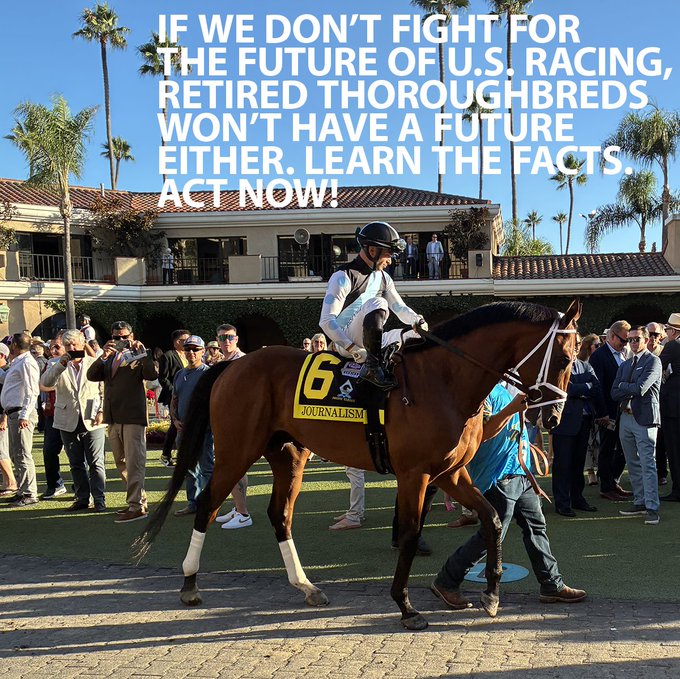
Much has been written recently about the plight of U.S. off-the-track thoroughbreds who have unfortunately wound up in the hands of unscrupulous entrepreneurs who hold them hostage for ransom in what are typically described as "kill pens" where most suffer from poor treatment and lack of medical care while waiting to be rescued by good Samaritans. However, the true scope and financial costs of the racing industry's thoroughbred retirement problem has largely been ignored. Providing professional life-long care for thoroughbred horses who are no longer racing is an expensive proposition that most people simply can't afford. It's worth remembering that thoroughbred horses are bred and registered with the Jockey Club for one purpose, and one purpose alone -- to participate in the business of horse racing, either in the United States or elsewhere in the world where the sport is still popular. They are born to run and are not necessarily bred or adapted for any other purpose. Beyond serving as companions or pasture props, there are other horse breeds that are intrinsically better suited to the avocation or profession of trail riding, dressage, eventing or show jumping. This is not to say, of course, that thoroughbred horses cannot have fulfilling careers in those disciplines, but to do so they require significant and not inexpensive training at properly equipped and financed facilities. Ignoring the reality and financial consequences of these facts, does no good for the welfare of 'rescued' horses or their future.
Here are some financial facts to consider. Current estimates of the monthly total cost for providing professional quality lifetime horse care to thoroughbred horses at professionally equipped, fully-amortized, facilities (where all explicit and implicit occupancy costs are taken into account) located in weather friendly, good horse infrastructure areas, including expenses for regular veterinary, dental and farrier services will currently range from $900- $1200 month. They will be higher over time, of course, as inflation takes its toll Based on these costs, the current total present value out-of-pocket cost of providing professional care to a foal crop of 14,000 thoroughbreds in the form of a retirement annuity purchased at foal registration could be as high as $1.6 billion dollars, assuming an actuarial interest rate of 5.5% and an average mortality age of 25 years. If you assume that forty percent of that 14,000 foal crop will be taken care of by the upper echelons of the horse racing community who have farms and/or financial resources to take care of those horses' retirement needs themselves on a 'self-insured', pay-as-you-go basis, that leaves a potential unfunded retirement cost liability for the remainder of the foal crop of as much as $1 billion. Closing the funding gap for that group of thoroughbreds would require the upfront payment of as much as $115,000 at time of foal registration or, say, five annual installments of as much as $37,000 per year for the first five years of the horse's life. The problem, in simple terms, is that possibly as many as 60% of all thoroughbred horses bred for racing are being bred by some owners who, to date, have not been financially able or willing to assume either individual or corporate liability for the lifetime retirement costs of those horses, a situation which is exacerbated by the fact that a thoroughbred's useful racing life is normally such a small fraction of their total life span. While many thoroughbred horses in that at-risk group are fortunate enough to find off-track homes through the kindness of strangers, their future is not assured, and remains mostly dependent on private buyers or charity.
Solving this funding gap requires two things to happen. The first is to recognize that breeders should be held primarily responsible for the lifetime costs of thoroughbred retirement, and the second is that the horse racing industry needs to focus on increasing the gross revenue and profit realized by breeders and owners from the horse racing business. That liability should then be managed and regulated to accommodate the sale of horses, either by private treaty or auction, to allow the transfer of that liability to financially-qualified purchasers during the ownership lifecycle. The continuing decline in popularity and finances of the American horse racing industry will not generate sufficient funds to solve the thoroughbred aftercare problem, given the way racing is organized and conducted today.. Participation and interest in horse racing has to increase by several orders of magnitude to generate the amount of money that would make the funding of thoroughbred retirement costs financially possible. Failing to accomplish both these goals will inexorably lead to the extinction of this much beloved and historically significant 'game' which once was and should again be a 'sport of kings' that the ordinary person can nonetheless enjoy.It's important to understand that U.S. horse racing can no longer survive without being aggressively managed, promoted and marketed by a single legal entity, the same as other major sports businesses in the U.S, such as the NFL, MLB, NBA, and NHL, The United States is the only major racing jurisdiction that lacks a national governing body, in contrast to Australia, England, France and Japan. Such a for-profit national U.S. governing organization would probably require the protection of specific or de facto exemptions from the application of the Antitrust laws as some other sports league organizations enjoy. Because of 10th Amendment restrictions on Federal jurisdiction over State police powers, the operation of such an entity would require each State in which horse racing is conducted to either cede their individual authority in favor of pattern State legislation, just as was done when the Uniform Commercial Code was adopted in the '50's and '60's. Such pattern legislation would have the effect of standardizing the operational and safety rules for horse racing and modernize the sport in order to increase revenue potential and interest among a wider demographic than exists at present. The alternative would be expand the applicaton of the HISA [Horse Racing Integrity and Safety Authority] Act to the overall Federal regulation of the industry, using the same Interstate Commerce Clause justification as currently underpins HISA.
These innovations should include the elimination of the present unfair arbitrage advantages afforded to computer assisted wagering syndicates, providing low cost and transparent access to all horse racing statistical data for the sport to facilitate the development of AI-based wagering and horse welfare tools that could distribute handicapping winnings across a broader spectrum of bettors, particularly younger, entry-level bettors, reducing the overlap and apparent time delays between scheduled race events, as well as the general adoption of fixed odds betting -- allowing all manner of exotic, post start and proposition wagers, as is the case with sports betting today -- all of which would be focused on attracting a younger, technologically more sophisticated audience, most of whom have been raised on computer games, To put that thought in perspective, total horse race wagering handle for 2024 was $11.27 billion, down for the third straight year, while video game spending stood at $58.7 billion, up from the prior year, with strong participation from the 18-34 demographic, at least 20 years younger than most who wager on horse racing today.
But just as important as implementing the changes described above, the industry also needs to re-focus on the welfare of the horse, full stop. It is the thoroughbred race horse itself which should be the focus of racing. An industry which fails to respect and honor the legacy of these noble beings does not deserve to survive. For all those who love and appreciate racing, the time to organize and take decisive action is now. Kicking the can down the road, tentative, cautious half-steps, cosmetic eye-wash, and sentimental hopes will not work. The industry and the people involved with it need to change, and they need to change now. The status quo is unacceptable.
If you care about the future of racing and the thoroughbred horses that depend upon it, are you willing to support a grass roots organization that will step up to this legal and financial challenge and make it happen? Please share your thoughts.
